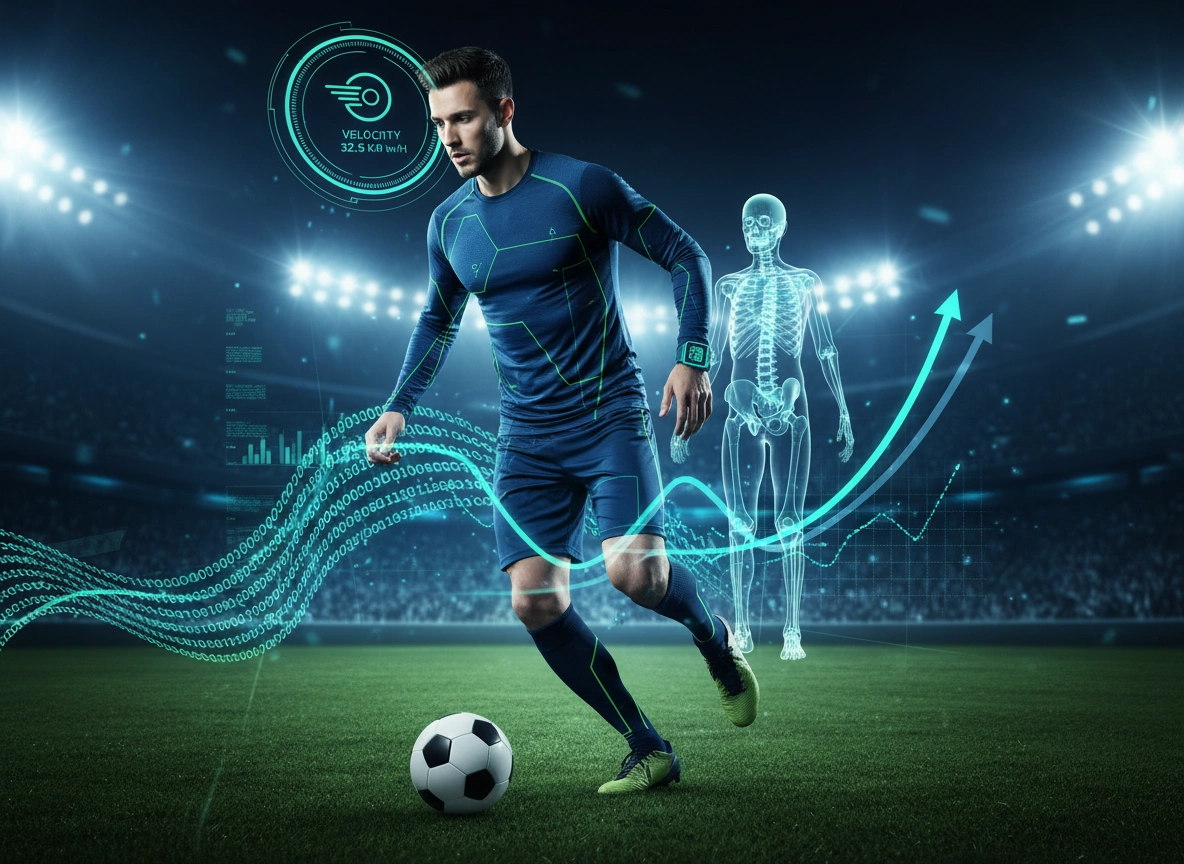
The roar of the crowd, the thrill of the last-second victory, the dedication of the athlete—these elements of sport are timeless. Yet, behind the scenes, a quiet revolution has been reshaping how athletes train, compete, and recover. Technology is no longer just a tool for broadcasting games; it has become an integral part of enhancing sports performance. From the gear on an athlete’s body to the complex data analyzed by coaches, technology is unlocking new levels of human potential.
This article explores the profound impact of technology on the world of sports. We will examine the key advancements that are revolutionizing training methodologies, pushing the boundaries of performance analysis, and making sports safer for athletes. By looking at specific tools like wearable devices, data analytics, and virtual reality, we can see how science and sport have merged to create the modern athlete.
Revolutionizing Athlete Training and Conditioning
Gone are the days when training was based solely on a coach’s intuition and a stopwatch. Today’s training regimens are precise, personalized, and data-driven, thanks to a suite of advanced technologies.
Wearable Technology: The 24/7 Coach
Perhaps the most visible technological advancement is the rise of wearable devices. Smartwatches, GPS trackers, heart rate monitors, and even smart clothing provide a continuous stream of physiological data. These devices track metrics like heart rate variability (HRV), sleep quality, oxygen saturation, and caloric expenditure.
For example, elite soccer teams embed GPS trackers in players’ vests to monitor their every move during a match or training session. Coaches can see how far a player has run, their top speed, and the intensity of their sprints. This data helps in managing player load to prevent overtraining and ensures athletes are at their peak physical condition for game day. Similarly, swimmers use sensors to analyze stroke rate and efficiency, receiving real-time feedback to make immediate adjustments.
This constant data flow allows for the creation of highly individualized training plans. Coaches can adjust workout intensity based on an athlete’s recovery status, ensuring they are pushing their limits without risking injury.
Biomechanics: The Science of Movement
Biomechanics uses motion-capture technology and force plates to analyze an athlete’s movements with incredible detail. By breaking down every phase of a motion—a golf swing, a pitcher’s throw, a runner’s stride—experts can identify inefficiencies and areas for improvement.
High-speed cameras capture movements that are invisible to the naked eye. This footage is then analyzed by specialized software to measure joint angles, force production, and body alignment. A baseball organization can use this to help a pitcher optimize their delivery for maximum velocity while minimizing stress on their arm. In track and field, biomechanical analysis can help a long jumper adjust their takeoff angle to gain precious centimeters. This granular focus on technique helps athletes refine their skills for greater efficiency and power.
Data Analytics: The New Playbook
If technology provides the data, analytics is what turns that data into a competitive advantage. Sports analytics has moved from simple box scores to complex predictive models that influence everything from game strategy to talent recruitment.
Performance Analysis and Strategy
Coaches and analysts now have access to vast datasets that reveal patterns and tendencies in both their own team and their opponents. In basketball, shot-tracking systems log the location of every shot taken by every player. This allows teams to identify high-percentage shooting zones and design defensive schemes to force opponents into less favorable positions.
In football, player-tracking data helps coaches understand which routes are most effective against certain defensive coverages and how to optimize player positioning on the field. This analytical approach takes the guesswork out of strategy, allowing teams to make decisions based on statistical probability rather than just gut feeling. The result is a more strategic and sophisticated level of competition.
Injury Prevention and Recovery
One of the most significant contributions of technology is in keeping athletes healthy. Predictive analytics can identify athletes who are at a high risk of injury. By monitoring training load, sleep patterns, and biomechanical data, teams can spot red flags before an injury occurs.
For instance, if a player’s data shows a significant drop in sleep quality combined with an unusually high training load, a team’s medical staff can intervene. They might recommend a lighter training day or specific recovery protocols to help the athlete’s body recuperate. Advanced imaging technologies like MRI and CT scans also allow for more accurate and faster diagnosis of injuries, leading to better treatment plans and quicker returns to play. Recovery tools, such as compression therapy systems and cryotherapy chambers, are also technologically driven, helping to reduce inflammation and speed up muscle repair.
Immersive Technologies: Training the Mind
Physical prowess is only one part of the equation. Mental preparedness is just as critical, and technologies like virtual reality (VR) and augmented reality (AR) are becoming powerful tools for cognitive training.
Virtual Reality (VR) for Repetition and Decision-Making
VR allows athletes to immerse themselves in realistic, game-like scenarios without any physical strain. A quarterback can use a VR headset to practice reading defenses and making throws against a variety of blitz packages. They can get thousands of mental repetitions, sharpening their decision-making skills in a controlled and safe environment.
Similarly, a Formula 1 driver can use a sophisticated simulator to practice on a new track, learning its every curve and braking point before ever setting foot there. This mental rehearsal builds muscle memory and confidence, which are invaluable on race day. VR is also being used for rehabilitation, allowing injured athletes to practice movements in a virtual space before they are physically ready to do so on the field.
Augmented Reality (AR) for Real-Time Feedback
While still an emerging field, AR has the potential to overlay digital information onto an athlete’s real-world view. Imagine a cyclist wearing smart glasses that display their power output, speed, and heart rate directly in their line of sight. Or a swimmer seeing a virtual pace line in their lane to help them maintain their target speed. AR can provide immediate, contextual feedback that helps athletes make adjustments on the fly.
The Future of Sports Performance
The integration of technology into sports is only accelerating. The next wave of innovation will likely involve even greater personalization and real-time feedback loops. Artificial intelligence (AI) will play a larger role in analyzing complex datasets to provide predictive insights and automated coaching advice. Advancements in genetics could lead to training and nutrition plans tailored to an athlete’s individual DNA.
As these technologies continue to evolve, they will further blur the line between human potential and scientific optimization. Athletes will become more efficient, more powerful, and more resilient than ever before.
Conclusion: A New Era of Athletic Excellence
Technology has fundamentally changed the landscape of competitive sports. It has armed athletes and coaches with unprecedented insights into performance, health, and strategy. Through wearable devices, advanced data analytics, biomechanical analysis, and immersive VR training, the modern athlete is a product of both natural talent and scientific precision.
While the spirit of competition and human determination will always remain at the heart of sport, technology has become the critical partner in the quest for greatness. It has not replaced hard work, but rather amplified it, allowing athletes to train smarter, recover faster, and push the boundaries of what we once thought was possible. The result is a more exciting, more strategic, and ultimately higher level of play for everyone to enjoy.
Please vist this website for more info
