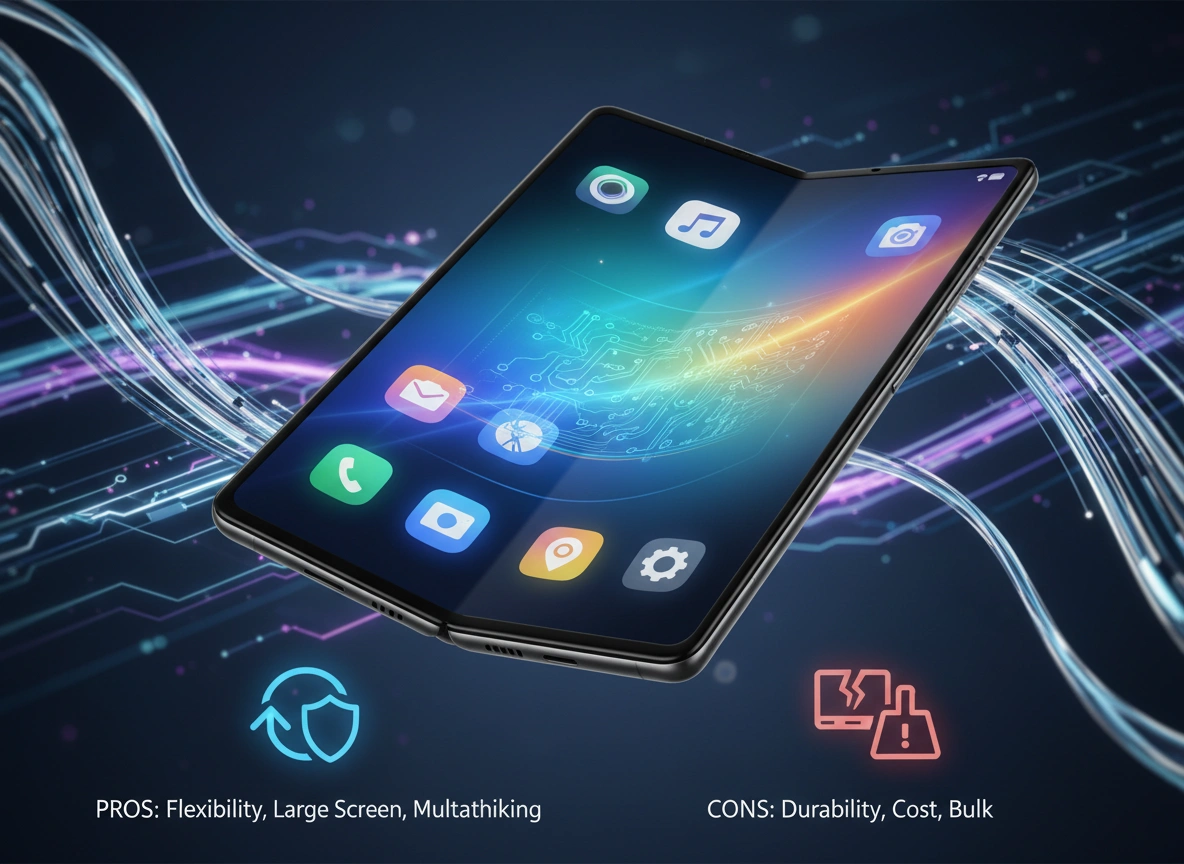
The smartphone industry, often criticized for reaching a plateau of innovation where new releases felt like incremental updates, has been jolted awake in recent years. The catalyst? The re-emergence and subsequent refinement of the foldable smartphone. Once dismissed as a nostalgic gimmick or a fragile experiment, foldables have matured into a legitimate and exciting category of consumer electronics. Major players like Samsung, Google, Motorola, and OnePlus have thrown their weight behind the form factor, signaling that this isn’t just a fleeting trend—it’s a serious contender for the future of mobile computing.
As these devices become more accessible and refined, consumers find themselves at a crossroads. Is it time to abandon the traditional “slab” phone for something that bends? To make that decision, we need to dive deep into the world of foldables, examining the technology that drives them, the benefits they offer, and the hurdles they still face.
The Engineering Marvel: Key Features and Innovations
To appreciate a foldable phone, you first have to appreciate the sheer engineering audacity required to make one. Unlike traditional smartphones, which rely on rigid glass and solid aluminum frames, foldables require components that can withstand thousands of movements without failing.
The heart of this innovation is the hinge mechanism. Early iterations were clunky and prone to letting dust in, but modern hinges are marvels of industrial design. They allow the device to open flat, close shut with a satisfying snap, and often hold their position at various angles (a feature often called “Flex Mode”). This hinge works in tandem with the display itself—typically an Ultra-Thin Glass (UTG) layer or advanced polymer that is flexible enough to bend but durable enough to touch.
Beyond the fold, these devices are pushing boundaries in battery distribution. Manufacturers often have to split the battery into two distinct cells, one in each half of the phone, balancing weight and power delivery. The internal architecture is a masterclass in space management, cramming flagship-level processors, multiple camera sensors, and cooling systems into a chassis that moves.
The Advantages: Why Bend?
Why would anyone want a phone that folds? The answer lies in the unique blend of portability and productivity that traditional phones simply cannot match.
Unrivaled Multitasking
For power users, the “book-style” foldables (like the Galaxy Z Fold series or the Google Pixel Fold) are a revelation. Unfolded, they offer a tablet-sized canvas that fundamentally changes how you work on the go. You can run two or three apps side-by-side with genuine usability. Imagine attending a video conference on one half of the screen while taking notes or checking emails on the other. It brings desktop-level multitasking to a pocketable device.
Portability Meets Immersion
The “clamshell” or “flip-style” foldables (like the Motorola Razr or Galaxy Z Flip) solve a different problem: pocketability. As phones have grown larger, they’ve become cumbersome to carry. A flip phone collapses a massive 6.7-inch display into a compact square that fits easily into small pockets or purses. It offers the best of both worlds—a large, immersive screen for media consumption when you need it, and a discreet, portable footprint when you don’t.
Enhanced User Experience
The form factor enables new modes of use. Being able to prop the phone up in a half-folded state acts as its own built-in tripod. This is revolutionary for taking hands-free selfies, recording video logs, or watching movies on a flight without needing a separate stand. The rear cameras can often be used for selfies using the cover screen as a viewfinder, resulting in significantly higher quality self-portraits than standard front-facing cameras can provide.
The Challenges: The “Fold” Tax
Despite the glowing innovations, the transition to foldables is not without its friction points. Adopting this technology currently requires a level of compromise that not every user is willing to accept.
Durability Concerns
This is the elephant in the room. While durability has improved massively, physics is stubborn. A moving part is an eventual point of failure. The screens on foldable phones are softer than the Gorilla Glass found on standard iPhones or Androids, making them more susceptible to scratches from fingernails or debris. While many now feature water resistance, dust resistance remains a significant challenge. A single grain of sand working its way into the hinge mechanism can be catastrophic.
Then there is the “crease.” While technology is getting better at minimizing it, most foldable phones still have a visible and tactile indentation running down the center of the screen where it folds. For some users, your brain tunes it out quickly; for others, it remains a persistent annoyance.
The Cost Barrier
Innovation is expensive. Foldable smartphones consistently command the highest prices in the mobile market. A high-end book-style foldable can cost nearly double the price of a standard flagship phone. Repairs are also significantly more expensive and complicated. Replacing a broken inner display on a foldable unit can sometimes cost as much as buying a new mid-range phone.
Software Optimization
While hardware has raced ahead, software is still playing catch-up. Google has made strides with Android to better support large and shifting screen sizes, but app developers are not always on the same page. Some popular apps still look like stretched-out phone apps rather than optimized tablet interfaces when used on the inner screen. The aspect ratios of foldables can also lead to “letterboxing” (black bars) when watching videos, meaning you aren’t always utilizing that massive screen real estate efficiently.
Foldables vs. The Traditional Slab
When we compare foldables to the traditional smartphone, the distinction becomes clear: it is a battle between specialized utility and refined reliability.
The traditional slab smartphone has been perfected over 15 years. It is incredibly durable, often dust and water-tight, has excellent battery life, and the cameras are usually superior because there are fewer space constraints. If you want a device that you can buy and not worry about for four years, the traditional slab is still the king of reliability.
However, the traditional phone has hit a ceiling. It cannot get physically larger without becoming unusable. The foldable phone breaks that ceiling. It offers an experience that transforms based on your needs. It is dynamic where the slab is static. The trade-off is that you are essentially beta-testing the future. You accept a slightly higher risk of damage and a higher price tag in exchange for a device that can do things no other gadget can.
The Future Outlook
The trajectory for foldables points upward. As supply chains mature, the cost of flexible displays and complex hinges will decrease, eventually bringing the price of these devices closer to parity with standard flagships. We are already seeing “mid-range” foldables entering international markets, a sign that democratization of the technology is underway.
Furthermore, we can expect the form factors to evolve. We may soon see “rollable” displays that expand without a hinge, or tri-fold devices that open up into even larger screens. As software optimization becomes standard practice for developers, the “weirdness” of using apps on a square screen will vanish.
Conclusion: Is It Worth the Investment?
Exploring the world of foldable smartphones reveals a landscape of incredible ingenuity tempered by the realities of early adoption.
So, are they worth it?
If you are a tech enthusiast who values novelty, innovation, and multitasking capabilities above all else, the answer is a resounding yes. The ability to carry a tablet in your pocket or fold a giant phone into a tiny square is a genuine quality-of-life upgrade that is hard to give up once you’ve experienced it.
However, if you prioritize extreme durability, value for money, and top-tier camera performance, you might want to wait another generation or two. The traditional smartphone remains the safer, more robust choice for the average consumer.
Foldable smartphones are no longer a science experiment; they are a viable, premium alternative to the status quo. They represent the first major shift in mobile hardware design in a decade, challenging us to rethink what a phone can be. Whether you buy one today or five years from now, one thing is certain: the future of smartphones is flexible.
Please vist this website for more info
