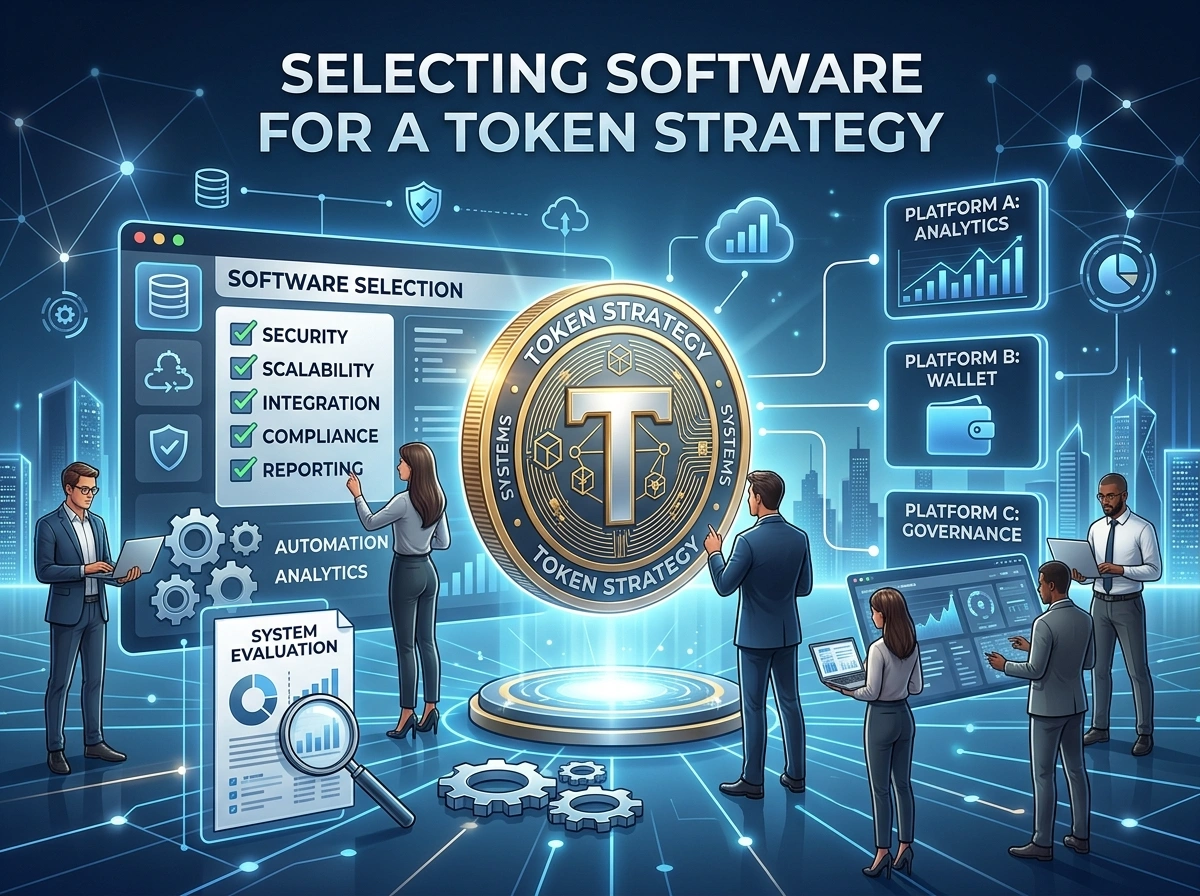
Choosing the right software for your token strategy can make or break your project. The wrong platform drains your budget, frustrates your team, and leaves your community waiting. The right one automates the busywork, sharpens your decisions, and helps your token thrive.
This guide walks you through the criteria that matter most. You’ll learn how to match software to your goals, audience, and operational needs—without getting lost in feature lists. By the end, you’ll have a clear framework for evaluating any tool before you commit. Let’s break it down.
Start With Your Token Strategy Goals
Before you compare a single platform, get clear on what you want your token to do. Software should serve your strategy, not the other way around.
Ask yourself what success looks like. Are you focused on rewarding loyal holders, driving trading volume, or building long-term community trust? A project that prioritizes holder rewards needs different tooling than one chasing rapid liquidity growth.
Write down your top three objectives. Then test every tool against them. If a platform doesn’t directly support your goals, its shiny extras won’t matter. This simple filter saves you from paying for features you’ll never touch.
Understand Your Audience Needs
Your token doesn’t exist in a vacuum. Real people hold it, trade it, and talk about it. The software you choose should reflect how they behave.
Consider where your community spends time. Many Solana projects build their core engagement on platforms like Telegram and Discord, so your tools should connect there seamlessly. If your audience prefers automated alerts and instant updates, you need software that delivers them.
Think about technical comfort, too. A retail-heavy community values simplicity and clear notifications. A more sophisticated holder base may want detailed wallet insights. Match the experience to the people who actually use it.
Map Your Automation Requirements
Manual processes don’t scale. As your project grows, repetitive tasks eat into time you should spend on strategy.
Strong automation handles the routine work for you. Look for features like these:
- Automatic holder verification and role assignment
- Scheduled community updates and announcements
- Real-time buy and transaction alerts
- Reward distribution based on holding thresholds
The goal is to free your team from manual checks while keeping your community informed. A good rule: if you do a task more than three times a week, your software should automate it.
Prioritize Analytics and Reporting
You can’t improve what you can’t measure. Quality analytics turn raw on-chain activity into decisions you can act on.
Look for tools that track holder counts, wallet distribution, and trading patterns over time. The best platforms show trends, not just snapshots, so you can spot momentum shifts early. This helps you reward your most loyal supporters and respond quickly when engagement dips.
Reporting should be clear enough to share with stakeholders. If you need a data scientist to read the dashboard, the tool is working against you. Demand clarity alongside depth.
Check Integration Capabilities
Your token strategy software won’t be your only tool. It needs to play well with the rest of your stack.
Verify how the platform connects to your existing channels—wallets, community apps, and analytics services. Strong integrations reduce friction and prevent data silos. For Solana projects in particular, native compatibility with the chain’s ecosystem matters more than generic, multi-chain promises.
For a deeper look at how purpose-built Solana tools handle these connections, resources like Sol Bot Guides offer practical comparisons worth reviewing before you decide.
Plan for Scalability
The software that fits a 500-holder project may buckle under 50,000 holders. Choose for where you’re going, not just where you are.
Ask vendors how their platform performs under load. Can it handle spikes in transactions during a major announcement or listing? Does pricing scale predictably as your community grows, or does it jump sharply at certain tiers?
Scalability also covers features. A tool that lets you add capabilities as you mature beats one that forces a painful migration later. Plan for success, and pick software that grows with you.
Address Compliance Considerations
Regulation around tokens keeps evolving, and ignoring it carries real risk. The right software helps you stay on the right side of the rules.
Look for platforms that support transparent record-keeping and clear audit trails. If your strategy involves rewards or distributions, you’ll want documentation that holds up to scrutiny. Some tools also offer features that help you avoid promotional practices that regulators frown upon.
You don’t need legal advice baked into your software. You do need tools that make compliant operations easier rather than harder.
Don’t Compromise on Security
In crypto, security failures are catastrophic. A single vulnerability can drain trust and funds in minutes.
Evaluate how each platform protects your data and your community’s wallets. Strong options use read-only access where possible, meaning they never hold custody of funds or private keys. This dramatically lowers your risk profile.
Ask about the vendor’s track record. Has the platform been audited? How do they handle updates and incident response? A credible provider answers these questions openly. If they dodge them, walk away.
Test Usability Before You Commit
A powerful tool nobody can use is worthless. Usability determines whether your team actually adopts the software.
Run a trial whenever possible. Set up a real workflow and see how long it takes. Pay attention to the setup process, the dashboard clarity, and the quality of support documentation. If your team struggles during onboarding, daily use will be worse.
Involve the people who’ll use the tool most. Their feedback reveals friction you might miss. Smooth usability turns good software into a genuine asset.
Evaluate Long-Term Growth Fit
Your relationship with a software vendor is a partnership, not a one-time purchase. Choose one built for the long haul.
Look at how actively the platform ships updates and responds to community needs. A tool that improved steadily over the past year will likely keep improving. Stagnant products signal trouble ahead.
Consider the vendor’s understanding of your ecosystem. Solana-native tools that track the chain’s developments tend to stay relevant longer than generic alternatives. Align with partners who are investing where you’re invested.
Conclusion
Picking software for your token strategy comes down to alignment. Start with your goals, then weigh each tool against your audience, automation needs, and analytics requirements. Confirm it integrates cleanly, scales with your growth, and meets compliance and security standards. Finally, make sure your team can actually use it day to day.
No single platform wins on every front. Your job is to find the one that fits your specific strategy best. Use the criteria above as a checklist, run real trials, and ask hard questions before you commit.
The right software won’t just save you time—it will help your token strategy reach its full potential. Start your evaluation today, and choose with confidence.
