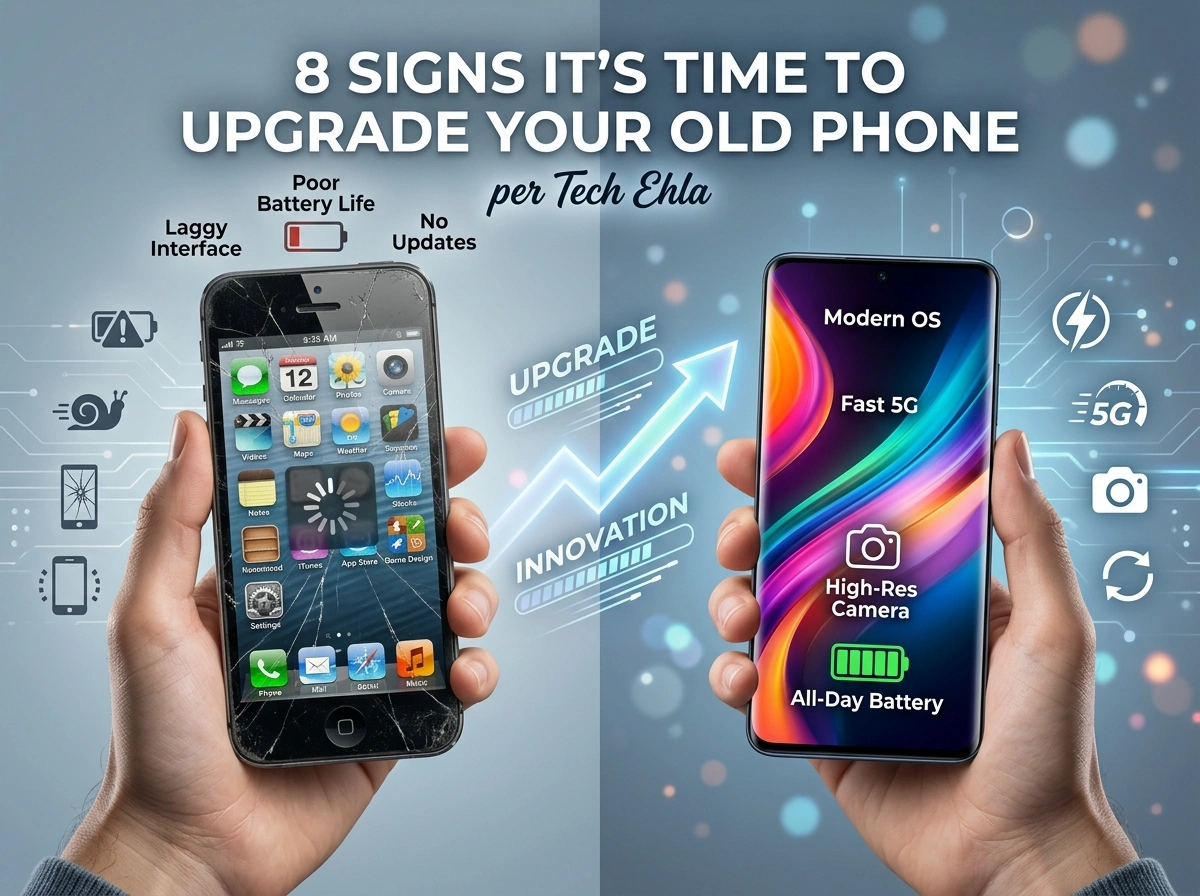
Your smartphone does a lot. It wakes you up, handles your banking, keeps you connected, and captures the moments that matter. So when it starts slowing down or acting up, it can throw off your whole day. The tricky part is knowing when a phone just needs a little maintenance and when it’s genuinely time to move on.
We’ve all held onto a device longer than we should. Maybe you love the familiarity, or maybe you’re just dreading the setup process for something new. But an aging phone can cost you time, money, and peace of mind. According to the tech experts at tech ehla, there are clear warning signs that tell you a new device is worth the investment.
Here are eight signs it’s time to upgrade your old phone.
1. Everything Feels Painfully Slow
Remember when your phone opened apps instantly and switched between screens without a hiccup? If those days feel like a distant memory, you’re not imagining things. Older processors struggle to keep up with modern apps, which grow more demanding with every update.
When simple tasks like sending a text or loading a webpage come with a frustrating delay, your hardware is showing its age. Try clearing your cache and deleting unused apps first. If your phone still crawls along after that, the slowdown is likely built into the device itself, and no amount of cleanup will fix it.
2. Your Battery Can’t Make It Through the Day
Battery health naturally declines over time. Most lithium-ion batteries start losing capacity after roughly 300 to 500 charge cycles, which usually lands somewhere around the two-year mark. If you’re reaching for a charger by lunchtime or carrying a power bank everywhere, that’s a red flag.
You can check your battery health right in your settings on most modern phones. When the capacity drops below 80 percent, performance takes a noticeable hit. While a battery replacement is an option for some models, the cost often makes upgrading the smarter long-term choice, especially if other issues are piling up too.
3. You’re Stuck on an Outdated Operating System
Software support is one of the most important and most overlooked factors in a phone’s lifespan. When manufacturers stop releasing updates for your model, you miss out on new features, performance improvements, and critical security patches.
This isn’t just an inconvenience. Running an unsupported OS leaves you exposed to security risks, since hackers actively target known vulnerabilities that will never get fixed. If your phone hasn’t received an update in over a year, or you’re seeing warnings that support has ended, it’s time to think seriously about upgrading. Your personal data is worth protecting.
4. You’re Always Running Out of Storage
That “Storage Full” notification is more than annoying. It stops you from taking photos, downloading apps, and installing updates. Older phones often shipped with limited storage, and today’s high-resolution photos, videos, and larger apps eat through that space fast.
You can offload files to the cloud or delete old content, but this becomes a constant battle. If you’re spending your weekends managing files just to free up a few gigabytes, a newer phone with more storage will save you the headache. Many current models start at 128GB or more, giving you room to breathe.
5. Your Screen Is Cracked or Damaged
A spiderweb of cracks isn’t just an eyesore. A damaged screen can cut your fingers, misread your touches, and let dust or moisture seep into the internal components. What starts as a small chip can quickly turn into a bigger, more expensive problem.
Screen repairs on newer flagship phones can run into hundreds of dollars. When the repair cost approaches the value of the device itself, replacing the phone often makes more financial sense. A fresh screen also means better brightness, sharper colors, and a smoother touch response than a worn-out display can offer.
6. Your Photos Just Don’t Look Good Anymore
Camera technology has advanced dramatically in recent years. If your once-crisp photos now look grainy, blurry, or washed out, your camera hardware may be falling behind. Low-light performance, in particular, has improved by leaps and bounds on newer models.
For many people, the camera is the single most important feature on a phone. We use it to document everything from family gatherings to work projects. If you find yourself disappointed with every shot, or reaching for a separate camera to get the quality you want, a modern phone with an upgraded camera system will make a real difference.
7. You’re Missing Modern Features
Technology moves fast, and features that were once premium are now standard. If your phone lacks 5G connectivity, you’re missing out on significantly faster download and streaming speeds as networks continue to expand across the country. Older phones may also be missing NFC for tap-to-pay, wireless charging, or water resistance.
These features aren’t just nice extras anymore. Contactless payment through your phone has become a part of everyday life, and reliable connectivity keeps you productive on the go. If your current device feels like it’s from a different era, upgrading unlocks conveniences you’ll wonder how you lived without.
8. Your Phone Crashes and Freezes Constantly
Occasional glitches happen to any device. But if apps regularly crash, your screen freezes, or your phone restarts on its own, something deeper is wrong. These issues usually point to hardware that can no longer handle the software you’re asking it to run.
A phone that fails when you need it most is more than frustrating. Imagine it freezing during an important call or while you’re trying to pay at the register. When crashes become a daily event and troubleshooting no longer helps, your device is telling you it’s ready for retirement.
How to Make the Right Upgrade Decision
Recognizing these signs is the first step. The next is choosing a replacement that fits your needs and budget. Think about how you actually use your phone. If photography matters most, prioritize camera quality. If you’re always on the move, focus on battery life and 5G support.
You don’t always have to buy the newest flagship, either. Mid-range phones have gotten impressively capable, and last year’s premium models often drop in price once a new version launches. Trade-in programs and carrier deals can also take a big bite out of the cost, so shop around before you commit.
It’s also worth backing up your data before you make the switch. Cloud services and transfer tools make moving your photos, contacts, and apps to a new device easier than ever, so the setup process no longer needs to feel overwhelming.
Stay Ahead of the Curve
Your phone is one of the most-used tools in your daily life, and it deserves to work as hard as you do. If you spotted several of these warning signs in your current device, that’s a strong signal it’s time for a change. Upgrading isn’t just about having the latest gadget. It’s about staying secure, productive, and connected.
The tech world never stops evolving, and staying informed is the best way to make smart decisions with your money. Keep learning about the latest devices, features, and trends so your next upgrade is one you feel great about. When you know what to look for, you’ll always choose the phone that’s right for you.
