Link building remains a cornerstone of search engine optimization. However, scaling this process requires significant time, effort, and resources. This reality leads many digital marketers and website owners to explore alternative strategies to accelerate their organic growth and improve their search visibility.
Purchasing links in large quantities can seem like a tempting shortcut to higher search rankings. The appeal is obvious: you save hundreds of hours on manual outreach, content creation, and negotiation. Outsourcing this tedious work frees up your schedule to focus on product development, content strategy, and customer experience. But approaching this tactic without a clear, well-thought-out strategy often results in wasted budgets and potential search engine penalties.
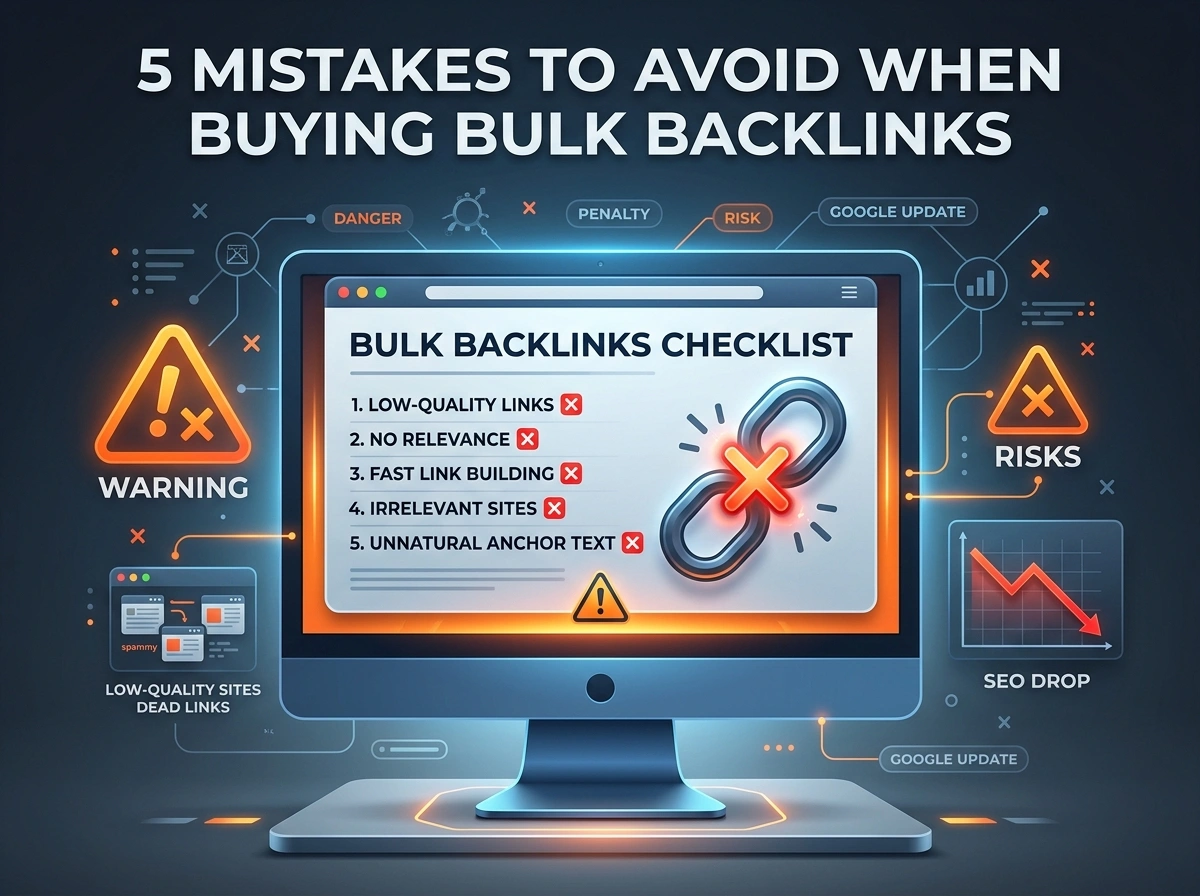
To succeed with a high-volume link strategy, you need to understand the pitfalls that trap inexperienced SEOs. By recognizing these common errors, you can protect your domain’s reputation while improving your visibility in search results. Here are the top five mistakes to avoid when scaling your link-building efforts.
Mistake 1: Ignoring Site Relevancy
Search engines prioritize context just as much as authority. Securing a link from a highly authoritative site means very little if the site’s content has zero connection to your industry. For example, a sports equipment retailer gaining a backlink from a culinary blog sends confusing signals to search algorithms. Google’s systems are designed to understand topical clusters, and irrelevant links stand out as blatant manipulation.
Relevance dictates the true value of a backlink. Focus on finding link placements within your specific niche or closely related industries. When a link makes sense contextually, it drives targeted referral traffic and reinforces your topical authority. A link from a smaller, highly relevant blog will often outperform a link from a massive, general-news website because it proves your expertise within a specific subject area.
Mistake 2: Overlooking Link Quality and DA/DR Metrics
Not all backlinks carry the same weight. Acquiring thousands of links from low-quality, spammy directories will harm your website rather than help it. Relying solely on volume is a dangerous approach in modern SEO. Search engines have grown incredibly sophisticated at identifying and devaluing low-effort link schemes.
Always evaluate the Domain Authority (DA) or Domain Rating (DR) of the sites linking to you. High-DR contextual placements from websites with genuine organic traffic provide the most significant ranking boosts. Be wary of link farms and Private Blog Networks (PBNs) that exist solely to manipulate search rankings. A few dozen placements on DR 40-90+ websites with strict editorial standards will yield vastly superior results compared to thousands of automated, low-quality links.
Mistake 3: Using Unnatural Anchor Text Distribution
Anchor text—the clickable words that contain the hyperlink—helps search engines understand the context of the linked page. Over-optimizing this text is a classic mistake. If exactly 80% of your inbound links use the exact same commercial keyword as the anchor text, search algorithms will quickly flag your site for review. Natural websites do not link to each other using perfect keyword phrases every single time.
A natural anchor text profile includes a healthy mix of branded terms, naked URLs, generic phrases, and partial-match keywords. This diversity signals that your links are being earned organically, even if you are actively acquiring them. Work closely with your link-building partners to map out an anchor text strategy that mimics organic sharing behavior, keeping exact-match keywords to a conservative minimum.
Mistake 4: Rapid Link Velocity (Spiking)
Link velocity refers to the speed at which your website acquires new backlinks. A brand-new website suddenly gaining 5,000 backlinks overnight looks highly suspicious. This unnatural spike triggers algorithmic filters and can lead to severe ranking drops or complete de-indexation. Search engines expect a website’s backlink profile to grow at a pace proportional to its content output and brand awareness.
Pacing is crucial when scaling your link profile. A steady, consistent acquisition of high-quality links over several months looks far more natural to search engines than a massive, one-time influx. If you are launching a new campaign, start small and gradually increase your acquisition rate as your site’s overall authority and organic traffic grow.
Mistake 5: Failing to Diversify Link Sources
A robust backlink profile relies on variety. If all your links come from a single type of source—such as only blog comments, only forum signatures, or only guest posts on a specific network—your strategy lacks authenticity. A footprint this obvious is incredibly easy for search engine algorithms to detect and penalize.
Search engines reward websites that attract links from a wide array of sources, including editorial articles, industry directories, news publications, and partner websites. Diversification protects your site from algorithm updates that might suddenly devalue a specific type of link. By building a varied portfolio of backlinks, you create a defensive moat around your SEO rankings.
Best Practices for Purchasing Backlinks
If you decide to scale your link building through paid avenues, prioritize quality and safety above all else. Work with reputable agencies that utilize white-hat techniques, perform manual outreach, and secure placements on real websites with actual traffic. Do your due diligence before handing over your marketing budget.
Look for providers that offer transparent reporting, guarantee niche-relevant placements, and avoid PBNs entirely. For instance, you might choose to Buy Bulk Backlinks through a trusted service that focuses on high-DR placements and real organic traffic. Proper vetting ensures your investment actually moves the needle for your commercial keywords within a reasonable timeframe. Always demand to see case studies and verified client results before committing to a large campaign.
Frequently Asked Questions About Bulk Link Building
Are bulk links safe from Google penalties?
Bulk links are safe only if they are sourced from genuine, high-quality websites using white-hat outreach methods. Purchasing cheap links from spam networks or PBNs will almost certainly result in a penalty. Safety comes from relevance, quality, and a natural link velocity.
How long until I see an increase in organic traffic?
SEO is a long-term game. While some high-DR contextual links can move the needle within 30 to 60 days, most campaigns require consistent effort over three to six months to show significant organic growth.
Do I get to approve the links before placement?
This depends entirely on the agency you hire. Premium link-building services often provide a dashboard or a dedicated account manager, allowing you to review domains and content before the link goes live. This ensures the placements align with your brand standards.
Building a Sustainable SEO Strategy
Scaling your backlink profile does not have to be a risky endeavor. By avoiding these five critical mistakes, you can safely boost your domain authority and climb the search engine results pages.
Focus on relevance, prioritize high-quality metrics, maintain a natural anchor text distribution, pace your link velocity, and diversify your sources. When executed carefully, a structured link-building campaign provides a massive return on investment, driving sustainable organic traffic to your website for years to come. Take the time to build your infrastructure correctly, and the rankings will naturally follow.
